Year 5
English
In English, the children are learning about instructional writing. They have studied the key features of this genre and covered a variety of activities to enable them to recognise how an excellent set of instructions should be structured. As a part of this process, the children worked in pairs to follow a set of instructions carefully and make a paper dragon. The children thoroughly enjoyed the activity and worked with resilience and enthusiasm. In Autumn two, the children will be learning about the difference between fiction and a non-chronological report. They will be writing their own non-chronological reports displaying all the knowledge that they have learnt about the Vikings.
Maths
In Year 5, our young mathematicians are taking their understanding of numbers to the next level! In place value, students are expanding their horizons to read, write, order and compare numbers up to 1,000,000, while mastering how the value of each digit changes as numbers are multiplied or divided by 10, 100, and 1,000. Building on this solid foundation, they are learning to round any whole number to the nearest 10, 100, 1,000, 10,000, or 100,000, helping them estimate answers quickly and make sense of real-world statistics. Finally, children are venturing beyond zero into negative numbers, using number lines and practical contexts like temperature to count forwards and backwards through zero and calculate differences across the scale.
Guided Reading
Throughout Autumn Term 1, our key text in English is 'How To Train Your Dragon' by Cressida Cowell. Hiccup Horrendous Haddock The Third, the main character, was an awesome sword fighter, a dragon-whisperer and the greatest Viking Hero that ever lived. The book explores Hiccup's struggle to pass the Dragon Initiation Programme with a toothless dragon and fight the Seadragonus Giganticus Maximus before it gobbles up every Viking on the Isle of Berk. It was time for Hiccup to learn how to be a hero. The children are thoroughly enjoying the book so far and can't wait to hear what will happen next!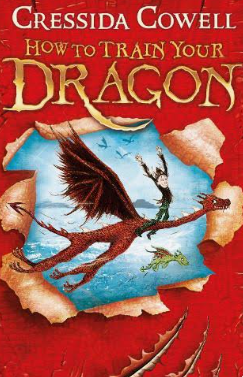
Science
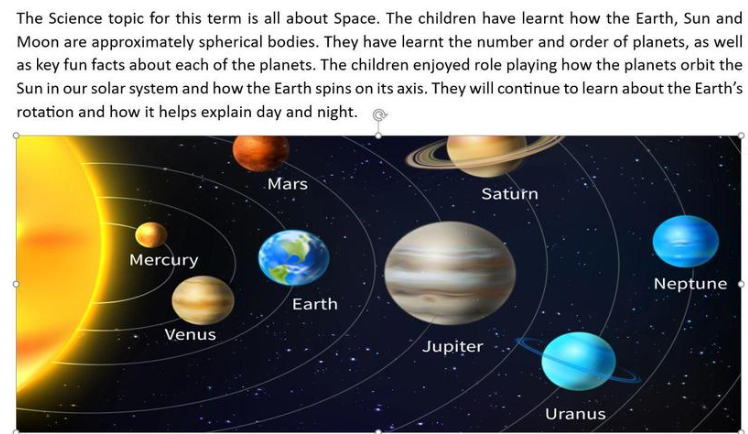
We are really looking forward to our trip to Winchester Science Centre and Planetarium next half-term to support our learning on this topic.
Art
Within Art, the children created stunning collages of Viking longships using a variety of artistic techniques. They experimented with collage to build the ships' intricate details, combining different textures and materials for a layered effect. Watercolour paints were used to create dynamic backgrounds, with salt and cling film used to add texture to represent the sea. The children also explored a range of techniques, such as stippling, shading, layering and scumbling with oil pastels to add depth and movement to their work. The final pieces showcased their creativity, skill and understanding of Viking history through art.
History - The Vikings
This term in topic lessons, the children are finding out about whom the Vikings were and how they were perceived by others. So far, they have identified where they originated from and the significant events that led to their invasion of Britain.